
CDL-A solo driving is defined as a single licensed driver operating a commercial truck independently, managing their own schedule, routes, and rest periods. CDL-A team driving, by contrast, places two licensed drivers in one truck, alternating shifts to keep the vehicle moving nearly around the clock. The CDL-A solo vs team difference comes down to one core trade-off: autonomy versus output. Understanding how that trade-off plays out across pay, lifestyle, freight, and federal regulations helps you choose the arrangement that fits your career goals in 2026.
How do pay structures compare between CDL-A solo and team driving?
Pay is the first factor most drivers evaluate, and the numbers tell a nuanced story. Team drivers earn $0.60–$0.80 per mile each, while solo drivers typically earn $0.45–$0.65 per mile. That gap looks significant on paper, but team pay is split between two drivers sharing the same truck.

Annual income ranges reflect this split. Company team drivers earn roughly $65,000–$104,000 per year, while solo company drivers earn $50,000–$85,000. The team range is higher at the ceiling, but the floor is not dramatically different from a well-run solo operation.
Net income is where the comparison gets more complex. Owner-operator solo drivers often retain higher net income except in premium expedited freight lanes. Fuel, maintenance, and operating costs rise with mileage, and team trucks run far more miles per week. Those costs cut into each driver's share.
Pro Tip: Before accepting a team driving offer based on the per-mile rate, calculate your estimated weekly net after splitting gross pay and factoring in any cost-sharing arrangements with your co-driver.
| Category | Solo Driver | Team Driver |
|---|---|---|
| Rate per mile | $0.45–$0.65 | $0.60–$0.80 (each) |
| Annual income range | $50,000–$85,000 | $65,000–$104,000 |
| Weekly miles covered | 2,000–2,800 | 5,000–6,000 (combined) |
| Pay structure | Full earnings kept | Split between two drivers |
| Best freight type | Regional, hands-on loads | Expedited, time-sensitive freight |
Freight brokers pay premiums for expedited team freight, making team driving financially attractive in specific lanes. General freight, however, often yields better net income for solo drivers who keep every dollar they earn.
What lifestyle differences should you expect in solo vs team trucking?
Lifestyle is where the CDL-A solo vs team difference becomes most personal. Solo driving gives you full control over your cab environment, your schedule, and your daily routine. You decide when to stop, where to eat, and how to organize your space. That level of autonomy suits drivers who value privacy and predictable patterns.
Team driving requires sharing a sleeper cab with another person for days or weeks at a time. You coordinate meal stops, temperature settings, noise levels, and sleep schedules. Personality compatibility is crucial for team driving success, and conflicts over basic daily preferences are among the most common reasons team arrangements fail.
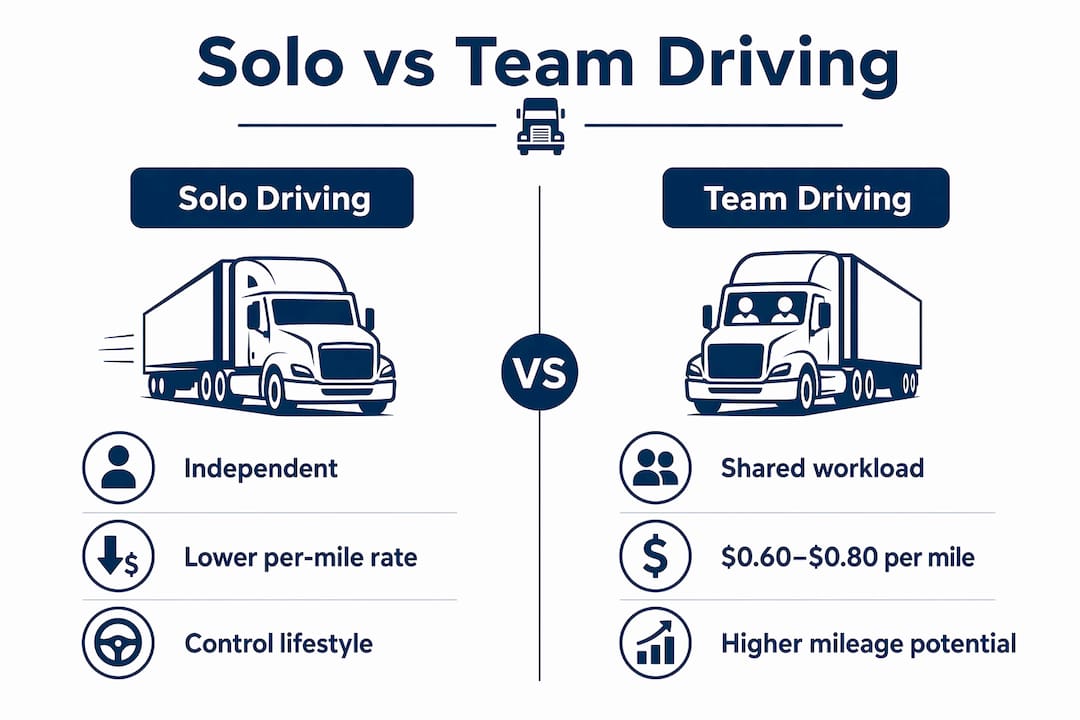
Sleep quality is a concrete, measurable concern for team drivers. Sleeping in a moving truck is challenging due to noise, vibration, and motion, and poor sleep directly affects alertness and long-term health. Solo drivers sleep in parked trucks, which is a meaningfully different experience.
Solo driving pros:
- Full privacy and personal space in the cab
- Consistent sleep in a stationary truck
- Independent control over schedule and stops
- No coordination required with a co-driver
Team driving pros:
- Built-in companionship on long hauls
- Shared workload reduces individual fatigue per shift
- Faster skill development for newer CDL-A holders
- Higher gross mileage and potential earnings ceiling
Pro Tip: If you are considering team driving with a friend or spouse, spend a weekend road trip together in close quarters first. Compatibility on the road is different from compatibility in everyday life.
How do Hours-of-Service rules affect solo and team CDL-A schedules?
Federal Hours-of-Service (HOS) regulations set the operational ceiling for both driving types, and the gap between them is significant. Solo drivers are capped at 11 hours of driving per duty period, with a mandatory 10-hour off-duty break before the next shift. That structure limits how far a solo truck can travel in a single stretch.
Team driving changes the math entirely. Team trucks operate 20–22 hours per day by rotating drivers, with one driving while the other rests in the sleeper berth. This relay system keeps the truck moving almost continuously without either driver violating HOS limits.
The mileage result is dramatic. Solo trucks average 2,000–2,800 miles per week, while team trucks cover 5,000–6,000 miles per week. That difference determines which freight types each arrangement can realistically handle and how often drivers return home.
| HOS Factor | Solo Driver | Team Driver |
|---|---|---|
| Max driving hours per shift | 11 hours | 11 hours (each driver) |
| Daily truck operation | 11 hours max | 20–22 hours |
| Weekly miles covered | 2,000–2,800 | 5,000–6,000 |
| Home time frequency | More frequent | Less frequent |
| Delivery speed | Standard | Expedited capable |
Home time is directly affected by this mileage gap. Team drivers cover more ground per week, which means longer stretches away from home between resets. Solo drivers generally return home more frequently, which matters significantly for drivers with families or local commitments.
What freight types fit solo versus team CDL-A drivers?
Freight assignment follows operational capability. Team drivers are regularly assigned expedited or time-sensitive freight that demands near-continuous truck movement. Carriers and freight brokers route this premium freight to team trucks because only a two-driver setup can meet tight delivery windows across long distances.
Solo drivers handle a broader range of freight types, including regional loads, hands-on deliveries, and routes with frequent stops. These loads often require driver involvement at each stop, such as liftgate operation, dock coordination, or customer interaction. A team setup is less practical for that kind of freight because both drivers cannot be active simultaneously.
Freight alignment by driving type:
- Team drivers: Cross-country expedited loads, pharmaceutical freight, automotive parts, high-value time-sensitive cargo
- Solo drivers: Regional distribution, LTL freight, local delivery routes, hands-on or appointment-based loads
Route structure also differs. Team drivers typically run point-to-point long-haul lanes where speed is the priority. Solo drivers more often run hub-and-spoke or regional patterns with predictable endpoints. For FedEx linehaul operations specifically, both solo and team configurations are used, with team trucks handling the longest overnight corridors.
Which CDL-A drivers are best suited for solo or team driving?
Choosing between solo and team driving is a self-assessment exercise as much as a financial one. Solo driving suits drivers who prioritize independence, privacy, and stable sleep cycles. If you prefer making decisions without coordinating with another person and value uninterrupted rest, solo is the natural fit.
Team driving suits drivers who can adapt to shared space and thrive with a partner present. The arrangement works best when both drivers have compatible habits, similar schedules, and clear communication. Many new CDL-A holders benefit from team driving because it provides on-the-road mentorship and a shared workload that accelerates skill development.
Here is a practical framework for self-assessment:
- Evaluate your sleep needs. If you require quiet, still conditions to sleep well, team driving will wear on you quickly. Poor sleep compounds over weeks on the road.
- Assess your social preferences. Team driving means constant proximity to another person. Drivers who recharge through solitude will find this draining over time.
- Consider your financial goals. If maximizing gross mileage and accessing expedited freight lanes is the priority, team driving offers a higher ceiling. If keeping all your earnings matters more, solo may net better results.
- Think about your experience level. New CDL-A holders gain faster practical experience in team arrangements. Experienced drivers often prefer the autonomy of solo operations.
- Identify a compatible partner before committing. Choosing team driving solely for money without a compatible partner leads to high turnover. Lifestyle fit matters more than the rate per mile.
Pro Tip: If you are transitioning from solo to team driving, start with a short-term trial run with your prospective co-driver before signing a long-term contract. Most carriers allow this arrangement.
Drivers can also move between arrangements over time. Many start in team driving to build experience and income, then transition to solo once they have established routes, relationships, and financial stability. The two options are not permanent choices.
Key takeaways
The core CDL-A solo vs team difference is this: team driving maximizes truck output and gross earnings potential, but solo driving preserves autonomy, sleep quality, and full income retention.
| Point | Details |
|---|---|
| Pay structure differs significantly | Team drivers earn more per mile but split gross pay; solo drivers keep all earnings. |
| HOS rules shape weekly output | Team trucks cover 5,000–6,000 miles per week versus 2,000–2,800 for solo trucks. |
| Lifestyle fit determines success | Partner compatibility and sleep tolerance are the top factors in team driving outcomes. |
| Freight types align with driving mode | Team trucks handle expedited loads; solo trucks handle regional and hands-on freight. |
| Career path can evolve | Many drivers start in team arrangements and transition to solo as experience grows. |
What I've learned watching drivers choose between solo and team
The financial argument for team driving is real, but it gets oversold. I have seen drivers accept team positions based on the per-mile rate without ever asking the harder question: can I actually sleep in a moving truck for weeks at a time? That question matters more than the rate.
The trucking trends shaping 2025 and 2026 freight strategies point toward more expedited freight demand, which benefits team drivers in specific lanes. But the general freight market still favors solo operators who can handle flexible, appointment-based loads without the coordination overhead of a two-driver team.
My honest observation is that new drivers underestimate how much personality compatibility affects team driving outcomes. Advanced team driving requires conflict management in close quarters, covering everything from temperature preferences to hygiene routines. These are not small issues after week three of a cross-country run.
The drivers I have seen thrive in team arrangements share two traits: they genuinely enjoy having a partner present, and they chose their co-driver carefully before signing anything. The drivers who struggle chose team driving for the money and figured the rest would work itself out. It rarely does.
Revisit your choice every year. Your financial needs, personal situation, and tolerance for shared space will change. The right arrangement at 28 may not be the right arrangement at 38.
— Aaron
Find your next CDL-A opportunity with Ucep
Ucep is a dedicated job board and recruiting platform built exclusively for Service Providers contracted with FedEx. Whether you are looking for a solo linehaul position or a CDL-A team driving role, Ucep connects you with verified opportunities in one focused place.
You can read service provider reviews from current and former drivers before you apply, so you know what to expect from a carrier before you commit. Ucep also lists companies actively hiring CDL-A drivers across solo, team, and pickup and delivery roles nationwide. Browse current openings, compare carriers, and make a more informed decision about your next move.
FAQ
What is the main CDL-A solo vs team difference?
CDL-A solo driving means one driver operates the truck independently, while team driving places two drivers in one truck to alternate shifts. The core difference is operational hours: solo trucks run up to 11 hours per day, while team trucks operate 20–22 hours daily.
Do team drivers earn more than solo drivers?
Team drivers earn $0.60–$0.80 per mile each versus $0.45–$0.65 for solo drivers, but pay is split between two people. Annual income ranges overlap significantly, and solo drivers may net more depending on freight type and operating costs.
Is team driving good for new CDL-A holders?
Team driving is often recommended for new CDL-A holders because it provides on-the-road mentorship and a shared workload that accelerates skill development faster than solo driving.
What freight do team CDL-A drivers typically haul?
Team drivers are regularly assigned expedited, time-sensitive, and high-value freight that requires near-continuous truck movement. Solo drivers more commonly handle regional loads, LTL freight, and hands-on delivery routes.
Can you switch from team to solo driving later in your career?
Yes. Many drivers start in team arrangements to build experience and income, then transition to solo driving once they have established routes and financial stability. Most carriers support this transition.